


TARC (CCL17): A Core Chemokine for Th2‑Mediated Immune Response — A Star Biomarker for Allergy, Inflammation and Cancer Research
 source:ELK Biotechnology
 date:2026-09-18
 views:161
TARC (CCL17): A Core Chemokine for Th2‑Mediated Immune Response — A Star Biomarker for Allergy, Inflammation and Cancer Research
Introduction
In research on type‑2 immune‑associated diseases, TARC (CCL17, thymus‑ and activation‑regulated chemokine) represents a high‑profile core target with rapidly growing research interest. Unlike conventional IgE, TARC directly mirrors the real‑time activation status of local Th2‑driven inflammation, and is widely adopted in research‑oriented biomarker assays for atopic dermatitis, asthma, lymphoma and other conditions. This article offers a comprehensive overview of the TARC target, covering its molecular basis, physiological‑pathological functions, disease‑related research applications, and key points for ELISA detection.
I. Molecular Basis of TARC (CCL17)
TARC stands for **Thymus‑ and activation‑regulated chemokine**, with the gene symbol *CCL17*. It belongs to the CC‑type chemokine family.
- Gene locus: Human *CCL17* gene maps to chromosome 16q21; NCBI Gene ID: 6361; UniProt: Q92583
- Protein characteristics: The precursor protein contains 94 amino acids. Cleavage of the 23‑amino‑acid signal peptide yields the mature secreted protein of 71 amino acids, with a molecular weight of approximately 8 kDa. It is a small, basic secreted protein.
- Major cellular sources: Dendritic cells, monocytes/macrophages, keratinocytes, epithelial cells, thymocytes and fibroblasts. Its expression can be induced by IL‑4, IL‑13, TNF‑α and IFN‑γ.
- Primary receptors: High‑affinity receptor CCR4, secondary receptor CCR8. CCL22 (MDC) shares the CCR4 receptor with TARC, resulting in competitive binding between the two molecules.
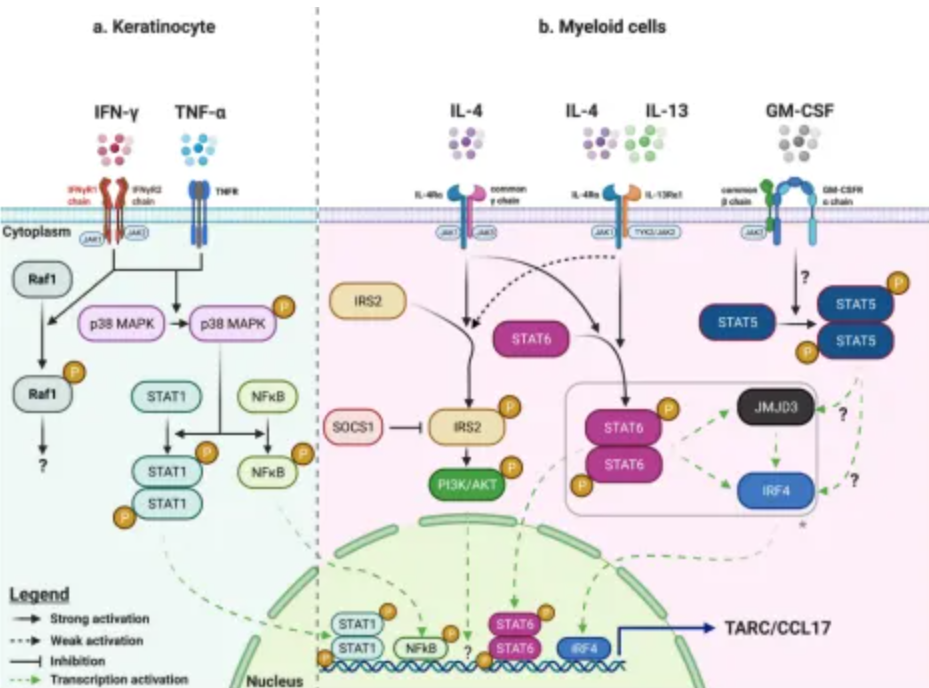
Core signaling logic**: IL‑4/IL‑13 triggers the STAT6‑IRF4 axis to drive TARC synthesis in myeloid cells. In keratinocytes, combined TNF‑α and IFN‑γ induce TARC expression via the NF‑κB pathway. Once secreted, TARC binds to CCR4 on target cells and mediates the recruitment and accumulation of Th2 cells, Tregs and basophils at inflammatory lesions.
Figure 1 Molecular mechanisms underlying TARC/CCL17 production in selected cell types
II. Key Physiological Functions
1. Thymic T‑cell development**: Initially identified in the thymus, TARC participates in intrathymic T‑cell development, maturation and homing, sustaining central immune homeostasis.
2. The “navigation molecule” for Th2 immunity**: It specifically chemoattracts CCR4‑positive Th2 cells, Treg cells and basophils, directing their migration to inflammatory sites such as skin and airways. As an upstream critical chemokine signal for initiating type‑2 immune responses, it barely mediates Th1‑dominated acute bacterial inflammation, enabling discrimination between allergic inflammation and ordinary infectious inflammation.
3. Immune homeostasis regulation**: Under physiological conditions, it supports skin and mucosal immunity. Dysregulated TARC expression drives excessive Th2‑type inflammation and participates in remodeling the immunosuppressive tumor microenvironment.
III. Research Value of TARC in Various Diseases
1. Allergic / Atopic Diseases (Most extensively studied)
✅ Atopic Dermatitis (AD)
Serum TARC concentration correlates strongly with EASI scores reflecting lesion severity, outperforming traditional IgE. It serves research purposes for disease stratification and assessment of therapeutic intervention efficacy, and is a well‑recognized core serum biomarker for AD research. Notably, TARC can be markedly elevated even in AD patients with normal IgE levels.
✅ Allergic Asthma & Allergic Rhinitis
Airway epithelial cells and dendritic cells secrete large quantities of TARC upon IL‑4/IL‑13 stimulation, recruiting Th2‑cell infiltration into airways and contributing to airway hyper‑responsiveness. TARC measured in serum or bronchoalveolar lavage fluid reflects the activity of airway type‑2 inflammation, supporting model evaluation and drug screening.
✅ Eosinophil‑associated disorders
In hypereosinophilic syndromes and eosinophilic esophagitis, TARC mediates eosinophil recruitment to lesions and acts as a reference marker for disease activity.
2. Hematological Malignancies
Serum TARC is significantly elevated in patients with Hodgkin lymphoma, cutaneous T‑cell lymphoma and multiple myeloma. In classic Hodgkin lymphoma, TARC levels can reach tens of thousands pg/mL, conferring a high diagnostic AUC. It is investigated for research‑based evaluation of tumor burden, prognosis and treatment response monitoring.
3. Autoimmunity and Chronic Inflammatory Conditions
In rheumatoid arthritis and inflammatory bowel disease (IBD), local TARC is up‑regulated at lesions, governing T‑cell subset infiltration and driving progression of chronic joint and intestinal inflammation. Preclinical animal studies demonstrate that CCL17 blockade alleviates inflammatory injury, identifying TARC as a potential therapeutic target.
4. Other Research Areas
Cardiovascular injury, chronic obstructive pulmonary disease (COPD), and selected solid‑tumor microenvironments: TARC modulates macrophage reprogramming and the establishment of immunosuppressive microenvironments, representing expanding frontiers of ongoing research.

 RETURN