


Comet Assay: The "Comet" Under the Microscope – A Fascinating Experiment for Detecting DNA Damage
 source:技术部
 date:2026-01-22
 views:1606
Comet Assay: The "Comet" Under the Microscope – A Fascinating Experiment for Detecting DNA Damage
When you hear "comet," you probably think of celestial bodies with long, glowing tails streaking across the night sky, or the European Space Agency's Rosetta mission. But the "comet" we're discussing today hides within laboratory microscopes – it's not an astronomical object, but a precise scientific method to "capture" DNA damage, known as the Comet Assay.
I. What is the Comet Assay?
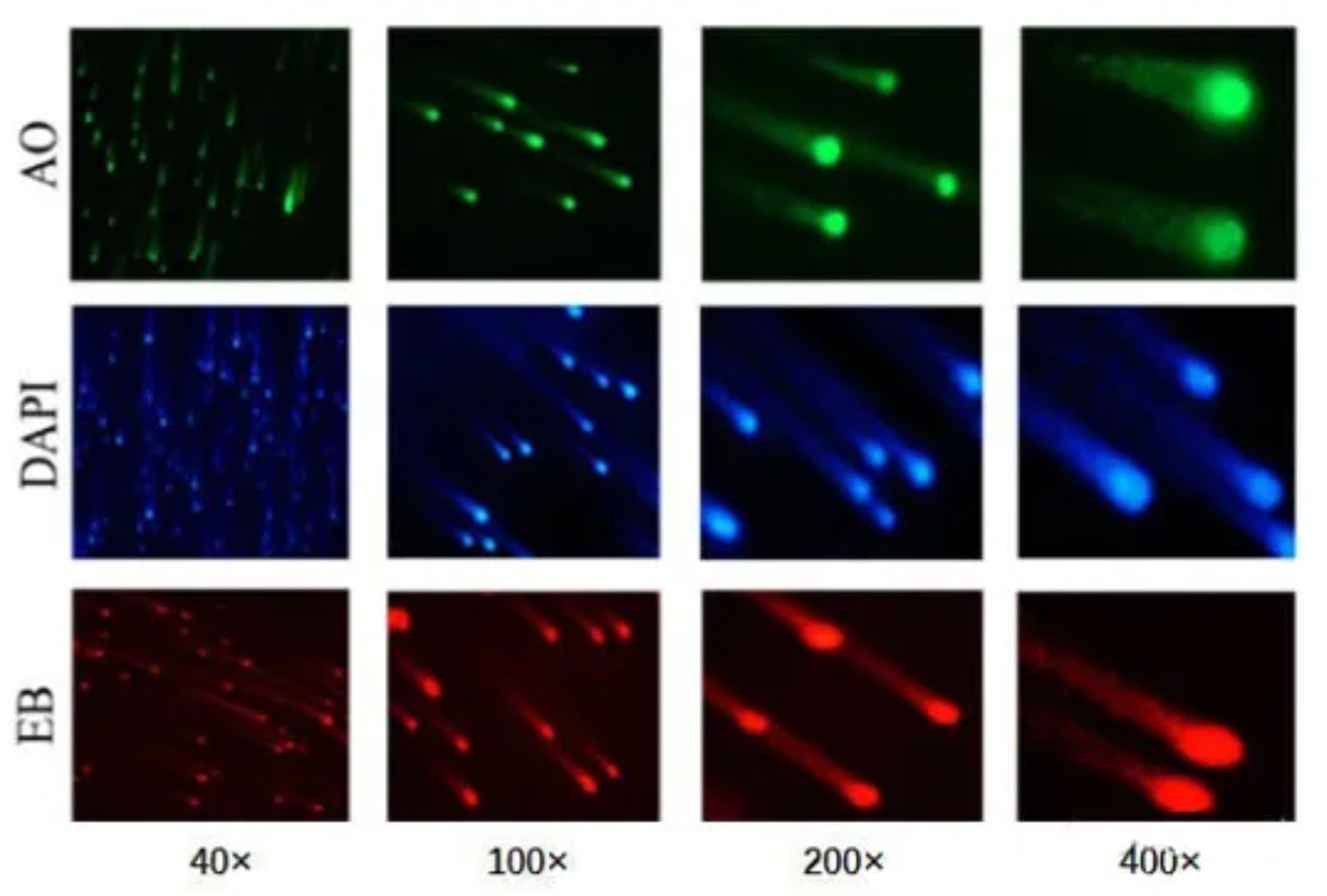
The Comet Assay, formally named the Single-Cell Gel Electrophoresis assay, is a highly sensitive technique used to detect DNA damage at the level of individual cells. When scientists observe treated cells under a fluorescence microscope, damaged DNA is pulled out from the nucleus, forming a bright "head" and a long "tail" – resembling a comet streaking across the sky, hence its name.
II. The Scientific Principle Behind the Assay
The nucleus of each cell contains our genetic material – DNA. Under normal conditions, DNA molecules are tightly coiled, like a neatly wound ball of yarn. However, when DNA is damaged (e.g., by breaks), this compact structure becomes loose.
In the Comet Assay, individual cells are embedded in a gel. Chemical methods are used to disrupt the cell and nuclear membranes, exposing the DNA. A weak electric field is then applied. Intact DNA molecules are large and move slowly through the gel, while smaller, fragmented DNA pieces migrate towards the anode. These migrating DNA fragments are stained with a fluorescent dye and become visible as the "comet tail" under the microscope.
The length and intensity of the comet tail are directly related to the extent of DNA damage: the more severe the damage, the longer and brighter the tail.
III. The Complete Workflow of a Comet Assay: From Cells to Images
The standard experimental procedure consists of four main steps:
1.Cell Embedding: The cells to be tested (which can be human, animal, or even plant cells) are uniformly mixed with low-melting-point agarose gel and spread onto a microscope slide. The gel solidifies, "trapping" the cells in place.
2.Cell Lysis: The slide is placed in a specialized lysis solution that breaks down the cell and nuclear membranes. This allows proteins, RNA, and other cellular components to diffuse away, leaving primarily the DNA behind.
3.Electrophoresis and Staining: The slide is placed in an alkaline electrophoresis buffer (pH >13), and an electric current is applied. After electrophoresis, a fluorescent dye is used to stain the DNA, making it glow.
4.Observation and Analysis: The slide is observed under a fluorescence microscope. Software is used to capture images and analyze them. Undamaged cells appear as round fluorescent spots without tails ("heads"), while damaged cells appear as "comet cells" with tails of varying length and intensity. By quantifying various comet parameters, the level of DNA damage can be determined.
A significant advantage of this technique is its minimal sample requirement – it only needs a small number of cells. It can be performed on cells regardless of whether they are dividing, and it is extremely sensitive, capable of detecting even slight damage caused by low concentrations of harmful substances.
IV. Applications of the Comet Assay
1.An Environmental Monitoring "Sentinel"
Want to know if a body of water or a soil sample contains pollutants? Cells from local fish or shellfish can be collected, or laboratory cells can be exposed to environmental samples. Using the Comet Assay to detect DNA damage levels helps assess the presence of genotoxic substances in the environment. For example, it is a core technique used to study the effects of urban airborne particulate matter on human cells.
2.A "Safety Guardian" for Pharmaceuticals and Cosmetics
Before new drugs or cosmetics reach the market, their safety must be evaluated. The Comet Assay can determine whether candidate drug compounds or cosmetic ingredients cause DNA damage, assessing their potential genotoxicity and helping to prevent harmful components from entering the market. For instance, a newly developed skincare product typically requires Comet Assay verification before launch to ensure its ingredients do not damage skin cell DNA.
3.An "Auxiliary Diagnostic Tool" in Clinical Medicine
In reproductive medicine, the Comet Assay (especially the two-tailed version) can assess sperm DNA integrity. Severe sperm DNA damage can lead to infertility or recurrent miscarriage. This test helps doctors accurately evaluate male fertility and provides a basis for infertility treatment. Furthermore, in oncology, the Comet Assay can be used to evaluate the effectiveness of chemotherapy or radiotherapy in damaging cancer cell DNA, assisting clinicians in adjusting treatment plans.
V. DNA Damage and Protection in Daily Life
We encounter factors daily that can potentially damage our DNA, such as ultraviolet (UV) radiation, air pollution, certain food additives, and even stress. Fortunately, our cells possess powerful DNA repair mechanisms. Maintaining a healthy lifestyle – including a balanced diet rich in antioxidants (found in foods like blueberries and green tea), avoiding excessive sun exposure, and not smoking – can help reduce DNA damage.
ELK Biotechnology provides high-quality reagents and kits to support sensitive and reliable Comet Assay analysis, aiding researchers in environmental monitoring, toxicology studies, and biomedical research.

 RETURN