$148.00/50µL $248.00/100µL
| 50 µL | $148.00 |
| 100 µL | $248.00 |
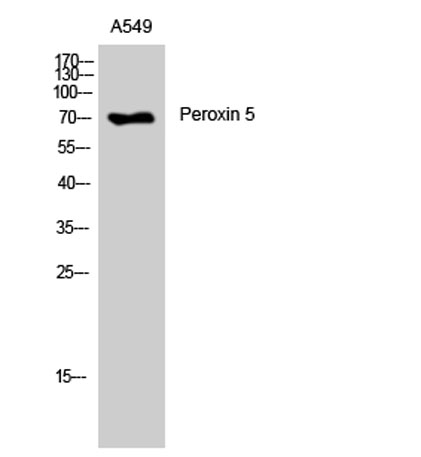
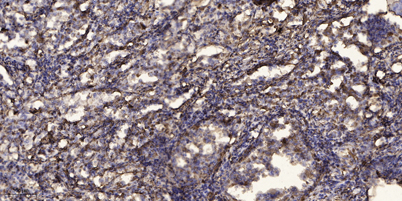
| Product name: | Peroxin 5 rabbit pAb |

| Reactivity: | Human;Mouse |
| Alternative Names: | PEX5; PXR1; Peroxisomal targeting signal 1 receptor; PTS1 receptor; PTS1R; PTS1-BP; Peroxin-5; Peroxisomal C-terminal targeting signal import receptor; Peroxisome receptor 1 |
| Source: | Rabbit |
| Dilutions: | WB 1:500-2000;IHC-p 1:50-300 |
| Immunogen: | Synthesized peptide derived from Peroxin 5 . at AA range: 540-620 |
| Storage: | -20°C/1 year |
| Clonality: | Polyclonal |
| Isotype: | IgG |
| Concentration: | 1 mg/ml |
| Observed Band: | 70kD |
| GeneID: | 5830 |
| Human Swiss-Prot No: | P50542 |
| Cellular localization: | Cytoplasm . Peroxisome membrane ; Peripheral membrane protein. Its distribution appears to be dynamic. It is probably a cycling receptor found mainly in the cytoplasm and as well associated to the peroxisomal membrane through a docking factor (PEX13). |
| Background: | The product of this gene binds to the C-terminal PTS1-type tripeptide peroxisomal targeting signal (SKL-type) and plays an essential role in peroxisomal protein import. Peroxins (PEXs) are proteins that are essential for the assembly of functional peroxisomes. The peroxisome biogenesis disorders (PBDs) are a group of genetically heterogeneous autosomal recessive, lethal diseases characterized by multiple defects in peroxisome function. The peroxisomal biogenesis disorders are a heterogeneous group with at least 14 complementation groups and with more than 1 phenotype being observed in cases falling into particular complementation groups. Although the clinical features of PBD patients vary, cells from all PBD patients exhibit a defect in the import of one or more classes of peroxisomal matrix proteins into the organelle. Defects in this gene are a cause of neonatal adrenoleukodystrophy (NALD) |

