$148.00/50µL $248.00/100µL
| 50 µL | $148.00 |
| 100 µL | $248.00 |
| Product name: | Btk (phospho Tyr551) rabbit pAb |

| Reactivity: | Human;Mouse;Rat |
| Alternative Names: | BTK; AGMX1; ATK; BPK; Tyrosine-protein kinase BTK; Agammaglobulinaemia tyrosine kinase; ATK; B-cell progenitor kinase; BPK; Bruton tyrosine kinase |
| Source: | Rabbit |
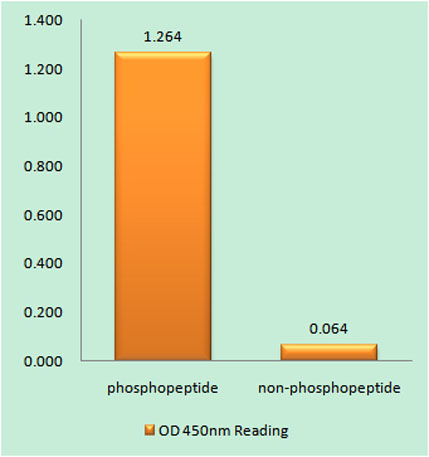
| Dilutions: | Western Blot: 1/500 - 1/2000. ELISA: 1/40000. Not yet tested in other applications. |
| Immunogen: | The antiserum was produced against synthesized peptide derived from human BTK around the phosphorylation site of Tyr551. AA range:516-565 |
| Storage: | -20°C/1 year |
| Clonality: | Polyclonal |
| Isotype: | IgG |
| Concentration: | 1 mg/ml |
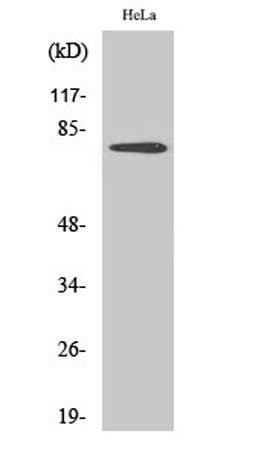
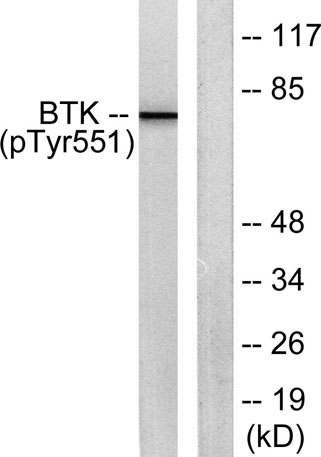
| Observed Band: | 80kD |
| GeneID: | 695 |
| Human Swiss-Prot No: | Q06187 |
| Cellular localization: | Cytoplasm. Cell membrane; Peripheral membrane protein. Nucleus. In steady state, BTK is predominantly cytosolic. Following B-cell receptor (BCR) engagement by antigen, translocates to the plasma membrane through its PH domain. Plasma membrane localization is a critical step in the activation of BTK. A fraction of BTK also shuttles between the nucleus and the cytoplasm, and nuclear export is mediated by the nuclear export receptor CRM1. |
| Background: | The protein encoded by this gene plays a crucial role in B-cell development. Mutations in this gene cause X-linked agammaglobulinemia type 1, which is an immunodeficiency characterized by the failure to produce mature B lymphocytes, and associated with a failure of Ig heavy chain rearrangement. Alternative splicing results in multiple transcript variants encoding different isoforms. [provided by RefSeq, Dec 2013], |


