Products

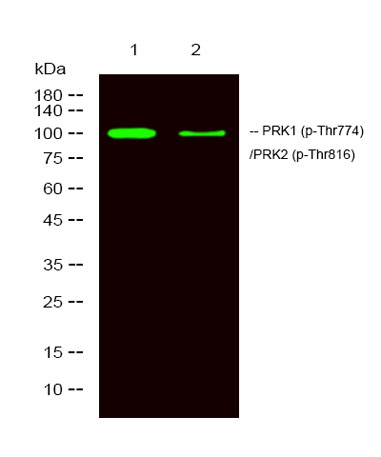
PRK1 (phospho-Thr774)/PRK2 (phospho-Thr816) rabbit pAb

One-click to copy product information
ES13956
Size: Price:
50 µL $148.00
100 µL $248.00

Overview

Product name: PRK1 (phospho-Thr774)/PRK2 (phospho-Thr816) rabbit pAb
Reactivity: Human;Mouse;Rat
Alternative Names: Serine/threonine-protein kinase N1 (EC 2.7.11.13) (Protease-activated kinase 1) (PAK-1) (Protein kinase C-like 1) (Protein kinase C-like PKN) (Protein kinase PKN-alpha) (Protein-kinase C-related kinase 1) (Serine-threonine protein kinase N)
Source: Rabbit
Dilutions: WB 1:500-2000;IHC-p 1:50-300; ELISA 2000-20000
Immunogen: Synthesized phosho peptide around human PRK1 (Thr774) and PRK2 (Thr816)
Storage: -20°C/1 year
Clonality: Polyclonal
Isotype: IgG
Concentration: 1 mg/ml
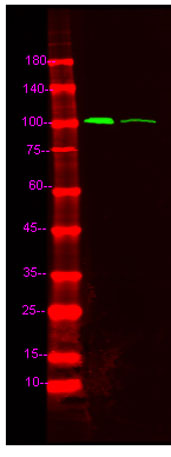
Observed Band: 103kD
GeneID: 5585
Human Swiss-Prot No: Q16512
Cellular localization: Cytoplasm . Nucleus . Endosome . Cell membrane ; Peripheral membrane protein . Cleavage furrow . Midbody . Associates with chromatin in a ligand-dependent manner. Localization to endosomes is mediated via its interaction with RHOB. Association to the cell membrane is dependent on Ser-377 phosphorylation. Accumulates during telophase at the cleavage furrow and finally concentrates around the midbody in cytokinesis. .
Background: protein kinase N1(PKN1) Homo sapiens The protein encoded by this gene belongs to the protein kinase C superfamily. This kinase is activated by Rho family of small G proteins and may mediate the Rho-dependent signaling pathway. This kinase can be activated by phospholipids and by limited proteolysis. The 3-phosphoinositide dependent protein kinase-1 (PDPK1/PDK1) is reported to phosphorylate this kinase, which may mediate insulin signals to the actin cytoskeleton. The proteolytic activation of this kinase by caspase-3 or related proteases during apoptosis suggests its role in signal transduction related to apoptosis. Alternatively spliced transcript variants encoding distinct isoforms have been observed. [provided by RefSeq, Jul 2008],