
$148.00/50µL $248.00/100µL
| 50 µL | $148.00 |
| 100 µL | $248.00 |
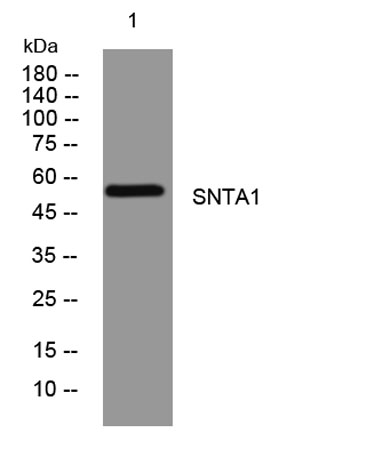
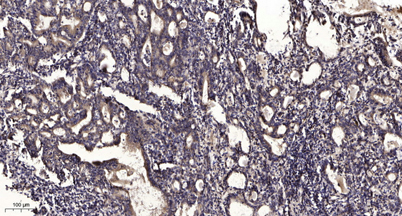
| Product name: | SNTA1 rabbit pAb |
| Reactivity: | Human; Mouse |
| Source: | Rabbit |
| Dilutions: | WB 1:500-2000;IHC-p 1:50-300 |
| Immunogen: | Synthesized peptide derived from human SNTA1 AA range: 289-339 |
| Storage: | -20°C/1 year |
| Clonality: | Polyclonal |
| Isotype: | IgG |
| Concentration: | 1 mg/ml |
| Molecular Weight: | 56kD |
| GeneID: | 6640 |
| Human Swiss-Prot No: | Q13424 |
| Cellular localization: | Cell membrane, sarcolemma ; Peripheral membrane protein ; Cytoplasmic side . Cell junction . Cytoplasm, cytoskeleton . In skeletal muscle, it localizes at the cytoplasmic side of the sarcolemmal membrane and at neuromuscular junctions. . |
| Background: | Syntrophins are cytoplasmic peripheral membrane scaffold proteins that are components of the dystrophin-associated protein complex. This gene is a member of the syntrophin gene family and encodes the most common syntrophin isoform found in cardiac tissues. The N-terminal PDZ domain of this syntrophin protein interacts with the C-terminus of the pore-forming alpha subunit (SCN5A) of the cardiac sodium channel Nav1.5. This protein also associates cardiac sodium channels with the nitric oxide synthase-PMCA4b (plasma membrane Ca-ATPase subtype 4b) complex in cardiomyocytes. This gene is a susceptibility locus for Long-QT syndrome (LQT) - an inherited disorder associated with sudden cardiac death from arrhythmia - and sudden infant death syndrome (SIDS). This protein also associates with dystrophin and dystrophin-related proteins at the neuromuscular junction and alters intracellular calcium ion levels in muscle tissue. [provided by RefSeq, Jan 2013], |

